

Understanding the inflation factor
September’s 3.8% inflation rate was probably the peak. How does it affect your planning?
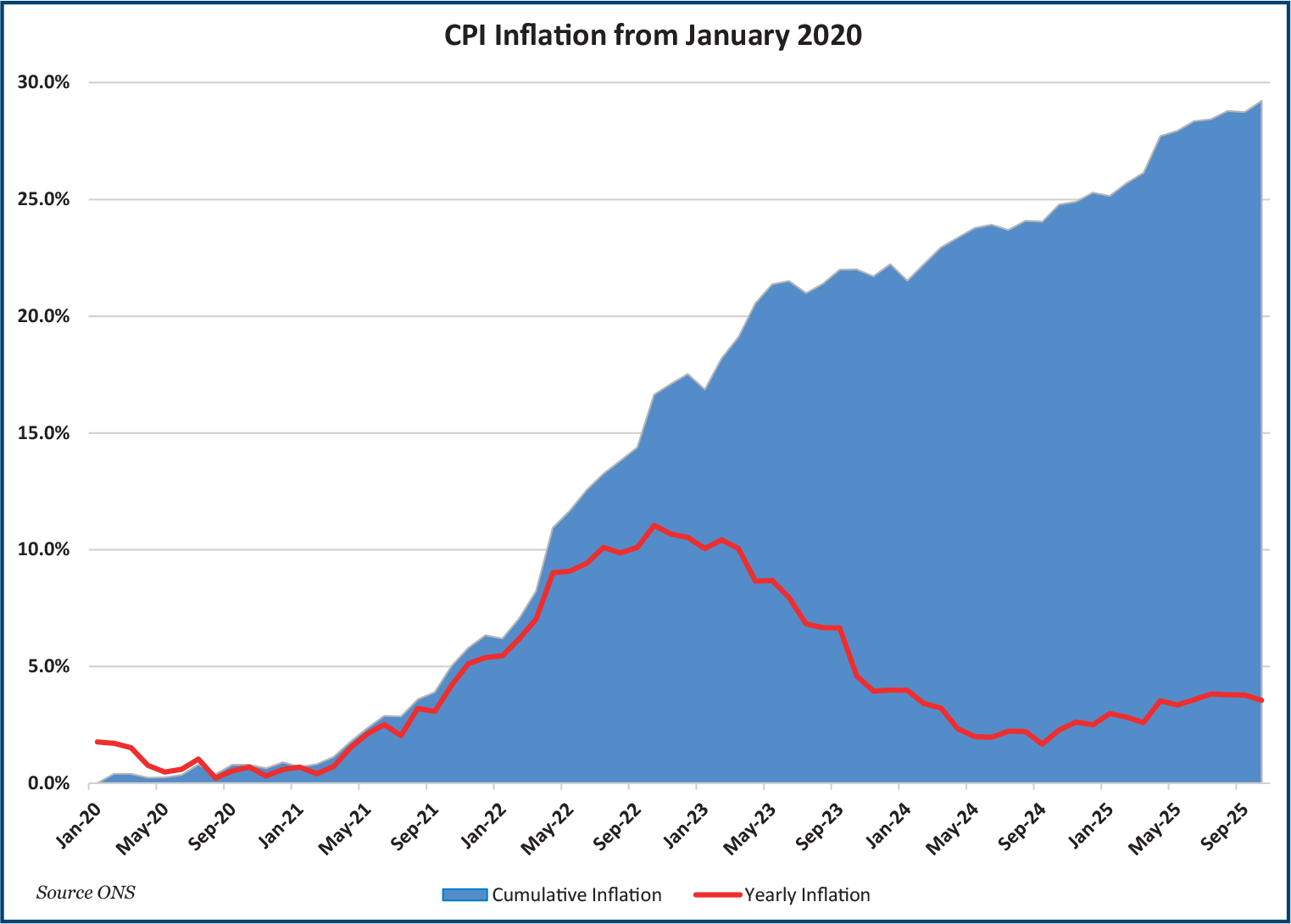
Most people are familiar with the inflation rate, published each month by the Office for National Statistics as the yearly Consumer Prices Index (CPI) inflation rate. The current consensus is that the figure reached a peak in September and will fall in 2026.
Despite being widely covered in the media, CPI inflation is poorly understood. For example:
- While food price inflation is often highlighted, the ‘Food (and non-alcoholic drinks)’ category accounts for only about a tenth of the CPI basket of 752 goods and services.
- CPI inflation takes no account of mortgage interest or other costs associated with home ownership.
Cumulative inflation effect
A key point is that a falling rate of inflation means price growth is slowing, not that prices are falling. While prices of individual CPI items can go up and down, the overall CPI rarely drops over the year. You can see this in the graph – the red line is yearly CPI inflation and the blue area is the cumulative rise in prices since January 2020.
As the end of 2025 approaches, overall prices (based on October’s CPI) are almost 30% higher than in January 2020 – an effective 5.5% average yearly inflation rate. Those numbers have important consequences for your financial planning:
- All other things being equal, any life cover or income protection that you have in place should be at a level 30% higher than it was at the start of 2020.
- Your retirement planning and other future savings goals probably need to be reviewed and contributions increased. When they were set up, it is unlikely an allowance was made for the inflation of the past half decade. Even though inflation outlook has improved, do not think that because it now appears to be on the way down you can ignore inflation’s past effects.
✣ The value of your investment and the income from it can go down as well as up and you may not get back the full amount you invested.
Past performance is not a reliable indicator of future performance.