

The lessons of ‘Liberation Day’
Investment markets had a wild ride after Trump’s tariff announcements. Amidst the turmoil there were lessons to be learned.
“Past performance is not a guide to the future” is a familiar warning from investment advertisements but is unlikely to have prepared you for what followed Donald Trump’s ‘Liberation Day’ tariff announcement on 2 April.
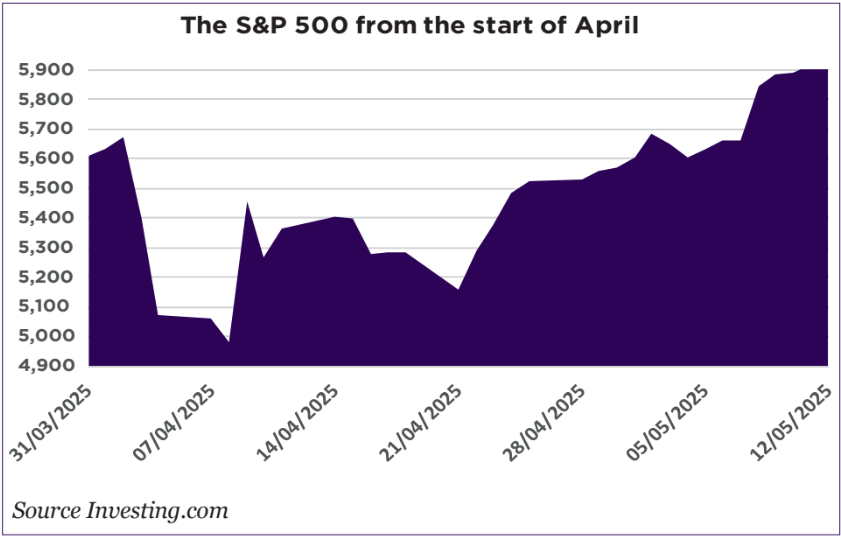
The graph shows US investors’ immediate reaction, as measured by the professionals’ preferred market index, the S&P 500. Most major stock markets reacted similarly with the FTSE 100 losing 10.5% between the end of March and 9 April, the date Trump announced the suspension of most tariffs for 90 days (to 8 July).
Markets rebounded on the news because it was interpreted as the end to high tariffs. This optimism was reinforced when, in mid-May, the US and China agreed a mutual 90-day reduction of 115% in the blockade level of tariffs they were applying to each other.
Timing
Look again at that graph and it’s easy to see that the right timing could have produced large profits. However, such wisdom is purely hypothetical as nobody knew how the tariffs would play out. A more likely scenario is the panicked investor who sold out after the Rose Garden announcement and got stuck holding cash as the market rebounded.
That is a major – and long-standing – lesson of the Trump tariff saga: timing the investment markets, whether buying or selling, is next to impossible without hindsight. Another familiar lesson is, to use a well-worn phrase, don’t panic. Markets have a habit of over-reacting in both directions. A third lesson is to remember investment is about the long term – not just one month – however dramatic.
✣ The value of your investment and any income from it can go down as well as up and you may not get back the full amount you invested. Past performance is not a reliable indicator of future performance.
Investing in shares should be regarded as a long-term investment and should fit in with your overall attitude to risk and financial circumstances.